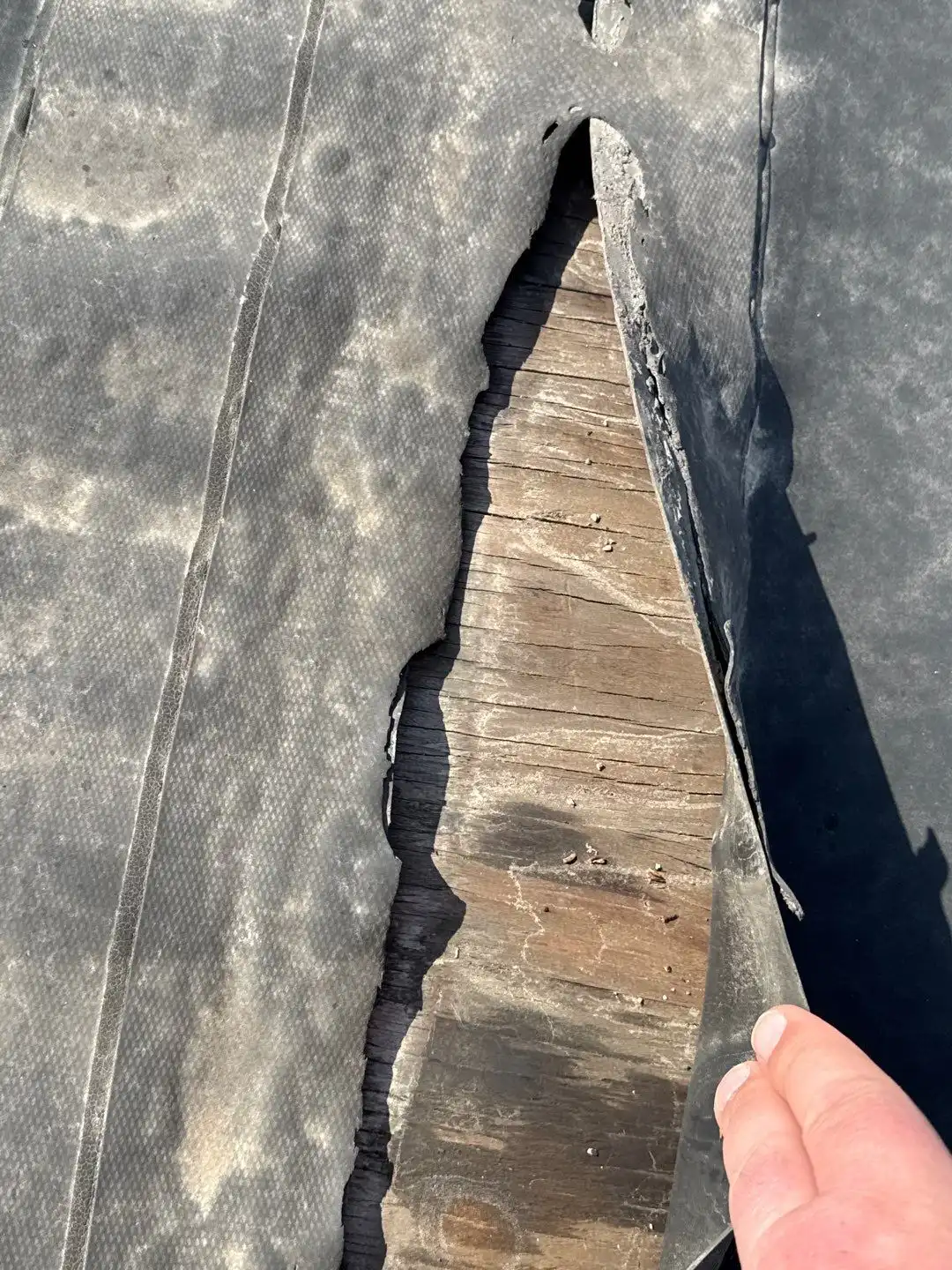
Inspecting after storms and other events
Beyond the regular schedule, certain events call for a prompt inspection, and for a Albion owner, knowing when to inspect outside the routine ensures sudden damage is caught quickly. Several situations warrant an event based check.
After major storms
The most common event based inspection is after a major storm, particularly one with high winds or hail, which can damage a roof suddenly, lifting or tearing the membrane, damaging flashings, or causing hail impacts. A prompt inspection catches this damage early. For a roof, inspecting after significant storms is important, since storm damage left undetected can lead to leaks and worsen over time, and prompt assessment also matters for any insurance claim while the damage is fresh.
After any sign of a leak or problem
Any sign of a leak or problem, an interior stain, a drip, dampness, warrants a prompt inspection to find and address the source before it worsens. Waiting lets the underlying problem continue causing damage. For a Noble County roof, treating any indication of a problem as a reason to inspect, rather than waiting for the next scheduled check, catches issues that have already begun, limiting the damage and addressing the cause while it is still contained.
Before and after major work or changes
Inspecting before and after major work on or near the roof, such as installing new rooftop equipment or other construction, ensures the roof is sound beforehand and undamaged afterward, since such work can affect the roof. This brackets the activity with checks. For a Albion roof, inspecting around major work protects against damage that construction or equipment installation can cause, catching any harm promptly and documenting the roof's condition before and after the activity.
Before buying or at other key moments
Certain key moments call for inspection regardless of the schedule, before buying a building, when assessing the roof for major decisions, or at the start of managing a new property. These moments benefit from a current assessment of the roof's condition. For a building, inspecting at these junctures provides the information needed for the decision at hand, whether evaluating a purchase or establishing the baseline condition of a roof newly under your care.
Responding to events promptly
Event based inspections, after storms, at signs of problems, around major work, and at key moments, supplement the regular schedule by catching sudden damage and addressing issues promptly. For a Noble County owner, this responsiveness ensures the roof is checked not just on a calendar but whenever circumstances warrant, which catches the damage and problems that arise between regular inspections, completing the monitoring of the roof.
Get a prompt inspection after an event
Finally, the schedule only protects the roof if it actually happens, which is why building inspection into a lasting routine matters more than knowing the right interval. A owner who puts the inspections into a maintenance plan ensures they occur consistently year after year, producing the documentation and the early problem catching that protect the roof over its life. The intention to inspect regularly is common; the sustained practice is what is rare and valuable, and it is what ultimately keeps a commercial roof healthy.
It also helps to match the frequency to the roof rather than applying one rule to every building, because an aging roof with a history of leaks needs closer attention than a sound new one. A Noble County owner who adjusts the schedule for the roof's age, condition, history, and importance gets monitoring proportioned to the actual risk, catching problems on the roofs most likely to have them. That tailored frequency, rather than a blanket interval, is what makes the inspection schedule both effective and sensible for a particular roof.
The broader point about inspection frequency is that the calendar is only half of it, since a roof should be checked both on a regular schedule and whenever events warrant, the two together providing real protection. A Albion owner who follows the twice yearly cadence but also inspects after storms and at the first sign of a problem catches both the gradual issues and the sudden damage, while one who relies on the calendar alone may miss storm damage between checks. The combined approach is what keeps a roof genuinely monitored.
Finally, the schedule only protects the roof if it actually happens, which is why building inspection into a lasting routine matters more than knowing the right interval. A owner who puts the inspections into a maintenance plan ensures they occur consistently year after year, producing the documentation and the early problem catching that protect the roof over its life. The intention to inspect regularly is common; the sustained practice is what is rare and valuable, and it is what ultimately keeps a commercial roof healthy.
It also helps to match the frequency to the roof rather than applying one rule to every building, because an aging roof with a history of leaks needs closer attention than a sound new one. A Noble County owner who adjusts the schedule for the roof's age, condition, history, and importance gets monitoring proportioned to the actual risk, catching problems on the roofs most likely to have them. That tailored frequency, rather than a blanket interval, is what makes the inspection schedule both effective and sensible for a particular roof.
The broader point about inspection frequency is that the calendar is only half of it, since a roof should be checked both on a regular schedule and whenever events warrant, the two together providing real protection. A Albion owner who follows the twice yearly cadence but also inspects after storms and at the first sign of a problem catches both the gradual issues and the sudden damage, while one who relies on the calendar alone may miss storm damage between checks. The combined approach is what keeps a roof genuinely monitored.
Finally, the schedule only protects the roof if it actually happens, which is why building inspection into a lasting routine matters more than knowing the right interval. A owner who puts the inspections into a maintenance plan ensures they occur consistently year after year, producing the documentation and the early problem catching that protect the roof over its life. The intention to inspect regularly is common; the sustained practice is what is rare and valuable, and it is what ultimately keeps a commercial roof healthy.
The broader point about inspection frequency is that the calendar is only half of it, since a roof should be checked both on a regular schedule and whenever events warrant, the two together providing real protection. A Albion owner who follows the twice yearly cadence but also inspects after storms and at the first sign of a problem catches both the gradual issues and the sudden damage, while one who relies on the calendar alone may miss storm damage between checks. The combined approach is what keeps a roof genuinely monitored.
Albion Commercial Roofing provides prompt inspections for Albion commercial roofs after storms and whenever a concern arises, catching sudden damage early. Call (765) 676-3491 to get your roof inspected after a storm or problem. Prompt response is what separates early problem catching from an expensive surprise.